Atlas of stylesAtlas de estilos
Piranesi architectural capriccio etchingCapriccio arquitectónico grabado tipo Piranesi
Italia, 1745-1778ItaliaArquitectura e interioresRarity 5/5Rareza 5/5JSON
Giovanni Battista Piranesi's architectural capriccio is an Italian etching style developed between 1745 and 1778 that invents impossible architectures from real Roman ruins. It combines arches, prisons, bridges, and staircases in spaces too vast to inhabit. It is unmistakable for its overwhelming scale against tiny figures, its dramatic contrast between light and deep shadow, and its obsessive etched line, which turns ancient stone into a theatrical, unsettling, sublime vision.
El capriccio arquitectónico de Giovanni Battista Piranesi es un grabado al aguafuerte italiano desarrollado entre 1745 y 1778 que inventa arquitecturas imposibles a partir de ruinas romanas reales. Mezcla arcos, cárceles, puentes y escalinatas en espacios demasiado vastos para ser habitados. Es inconfundible por su escala desmedida frente a figuras diminutas, su contraste dramático entre luz y sombra profunda, y su línea grabada obsesiva, que convierte la piedra antigua en una visión teatral, inquietante y sublime.
Visual vocabularyVocabulario visual
Forms: cyclopean arches, barrel vaults, domes, colonnades, broken pediments, obelisks, aqueducts, drawbridges, endless stairs, and machines with ropes, pulleys, and beams. Roman ruins are combined as if they were movable stage pieces, without respecting a real site. The line is fine, nervous, and cumulative; it describes stone, brick, cracks, and erosion through thousands of strokes. There is virtually no color: blacks, warm grays, and cream paper create the atmosphere. Ornament is classical and weathered, never clean or luxurious, always partly ruined and disproportionate.
Formas: arcos ciclópeos, bóvedas de cañón, cúpulas, columnatas, frontones rotos, obeliscos, acueductos, puentes levadizos, escalinatas sin fin y máquinas con cuerdas, poleas y vigas. Las ruinas romanas se combinan como piezas de escenografía movibles, sin respetar un lugar real. La línea es fina, nerviosa y acumulativa; describe piedra, ladrillo, grietas y erosión con miles de trazos. Prácticamente no hay color: negros, grises cálidos y papel crema crean la atmósfera. El ornamento es clásico y desgastado, nunca limpio ni lujoso, siempre en parte arruinado y desproporcionado.
CompositionComposición
The image is built as a stage set seen from a low, off-center viewpoint. Several vanishing points coexist, so stairs, bridges, and galleries lead nowhere and prolong the space beyond logic. The foreground is usually dark and cropped by a massive arch, the middle ground concentrates the architectural action, and the background dissolves into light or smoke. Tiny figures walk, gesture, or work without dominating the scene: their function is to make the vaults appear colossal.
La imagen se construye como un escenario teatral visto desde un punto bajo y descentrado. Conviven varios puntos de fuga, por lo que escaleras, puentes y galerías no llevan a ningún sitio y prolongan el espacio más allá de la lógica. El primer plano suele ser oscuro y estar recortado por un arco enorme, el plano medio concentra la acción arquitectónica y el fondo se disuelve en luz o humo. Figuras diminutas caminan, gesticulan o trabajan sin dominar la escena: sirven para que las bóvedas parezcan colosales.
Texture and techniqueTextura y técnica
It was made by etching with acid on a copper plate, reinforced with burin work, printed in black-brown ink on laid cream paper. Form is not painted: it is built from parallel hatching, cross-hatching, broken lines, and dense networks that darken as they accumulate. Stone looks rough and eroded, smoke is light and scratchy, and skies remain almost empty. Visible plate tone, irregular edges, and paper grain are essential.
Se hacía por aguafuerte con ácido sobre plancha de cobre, reforzado con buril, e impreso en tinta negro-parda sobre papel verjurado color crema. La forma no se pinta: se construye con tramas paralelas, tramas cruzadas, líneas quebradas y redes densas que se oscurecen al acumularse. La piedra se ve áspera y erosionada, el humo es ligero y rasposo, y el cielo queda casi vacío. Son esenciales el tono de plancha visible, los bordes irregulares y el grano del papel.
LetteringLetras
Engraved Roman capitals cut directly into the plate, inspired by classical inscriptions on stone. Letters are elegant, widely spaced, and architectural rather than calligraphic, often used in titles and dedications below the image. Avoid modern gothic or fantasy typefaces; the correct reference is carved Latin epigraphy, not medieval lettering.
Capitales romanas grabadas directamente en la plancha, inspiradas en inscripciones clásicas talladas en piedra. Son letras elegantes, con mucho aire entre caracteres y carácter arquitectónico, no caligráfico, usadas en títulos y dedicatorias bajo la imagen. Evita tipografías góticas modernas o de fantasía; la referencia correcta es la epigrafía latina tallada, no la letra medieval.
Why almost nobody uses itPor qué casi nadie lo usa
AI models tend to translate it into generic gothic castles, dark dungeons, or photorealistic ruins because they lack training in etching, conflicting perspective, and invented Roman architecture. It is also monochrome, dense, and anti-decorative, which clashes with clean commercial imagery. Today it offers what flat digital rendering lacks: vertigo, ambiguity, physical texture, and a critical way to imagine power, confinement, and monumental space.
Los modelos de IA tienden a traducirlo como castillo gótico genérico, mazmorra oscura o ruina fotorrealista porque les falta entrenamiento en aguafuerte, perspectiva contradictoria y arquitectura romana inventada. Además es monocromo, denso y antidecorativo, lo que choca con la imagen comercial limpia. Hoy aporta lo que el render digital plano no tiene: vértigo, ambigüedad, textura física y una mirada crítica sobre el poder, el encierro y el espacio monumental.
What gives a cheap imitation awayQué delata una imitación barata
Cheap imitations turn it into a clean fantasy castle, a photorealistic dungeon, or a video-game level with sharp digital lines. Other giveaways: a single logical perspective, stairs that all work, symmetrical architecture, smooth gray gradients without etched hatching, excessive fog hiding the drawing, and modern heroic characters. Piranesi is not tidy gothic decoration: it is invented Roman engineering, excessive, theatrical, and structurally contradictory.
Las imitaciones baratas lo convierten en un castillo de fantasía limpio, una mazmorra fotorrealista o un nivel de videojuego con líneas digitales nítidas. También lo delatan una perspectiva lógica única, escaleras que sí funcionan, arquitectura simétrica, degradados grises suaves sin trama grabada, niebla excesiva que oculta el dibujo y personajes heroicos modernos. Piranesi no es decoración gótica ordenada: es ingeniería romana inventada, excesiva, teatral y estructuralmente contradictoria.
Ideas for todayIdeas para hoy
- Poster: theatrical or opera poster with an impossible prison of arches behind a single tiny silhouette, printed in two inks on cream paper.Cartel: cartel de teatro u ópera con una cárcel imposible de arcos tras una sola silueta diminuta, impreso a dos tintas sobre papel crema.
- Brand: identity for a publisher, architecture studio, or winery using an invented vault as its emblem, engraved seals, and Roman capitals.Marca: identidad para una editorial, estudio de arquitectura o bodega con una bóveda inventada como emblema, sellos grabados y capitales romanas.
- Video game: exploration levels based on non-connecting bridges, endless stairs, and changing viewpoints, with navigation itself as the mystery.Videojuego: niveles de exploración con puentes que no conectan, escaleras infinitas y miradores cambiantes, donde orientarse es parte del misterio.
Related pieces in the museumPiezas relacionadas en el museo
Matched by shared themes and motifs — related, not necessarily in this exact style.
Encontradas por temas y motivos en común: relacionadas, no necesariamente en este estilo exacto.

View of the Remains of the Castrense Amphitheatre, by Giovanni Battista PiranesiVeduta dell'avanzo dell'Anfiteatro Castrense, de Giovanni Battista Piranesi

Girl Seated in Shadow, from Twelve Etchings from NatureNiña sentada en la sombra, de Twelve Etchings from Nature

Self-Portrait in a Cap and Scarf with the Face in Shadow: Bust, 1633Autorretrato con gorra y bufanda, con el rostro en sombra: busto, 1633
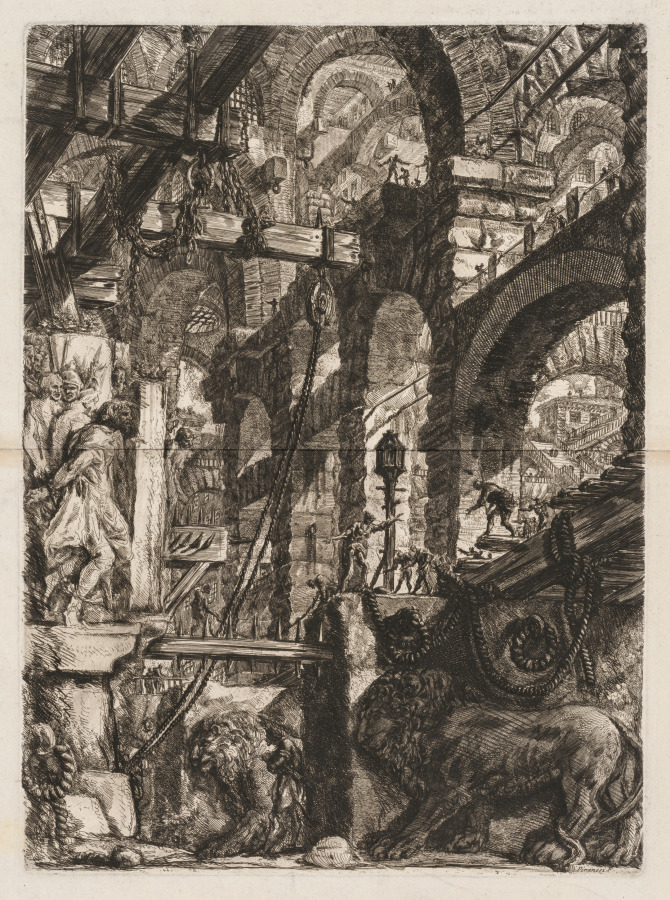
The Prisons: A Perspective of Roman Arches, with Two Lions Carved in Relief on Stone Slabs in the ForegroundLas cárceles: perspectiva de arcos romanos, con dos leones tallados en relieve sobre losas de piedra en primer plano
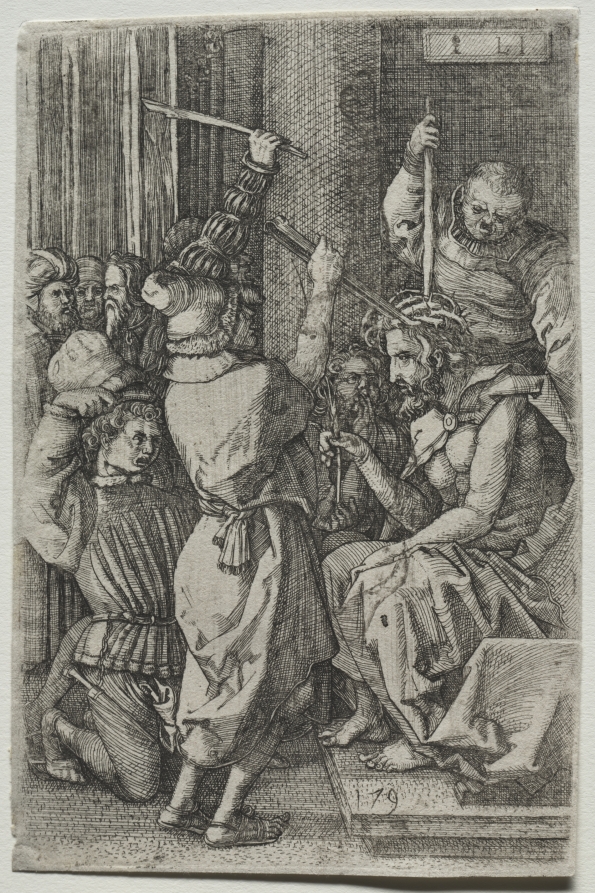
The Passion: Christ Crowned with ThornsLa Pasión: Cristo coronado de espinas
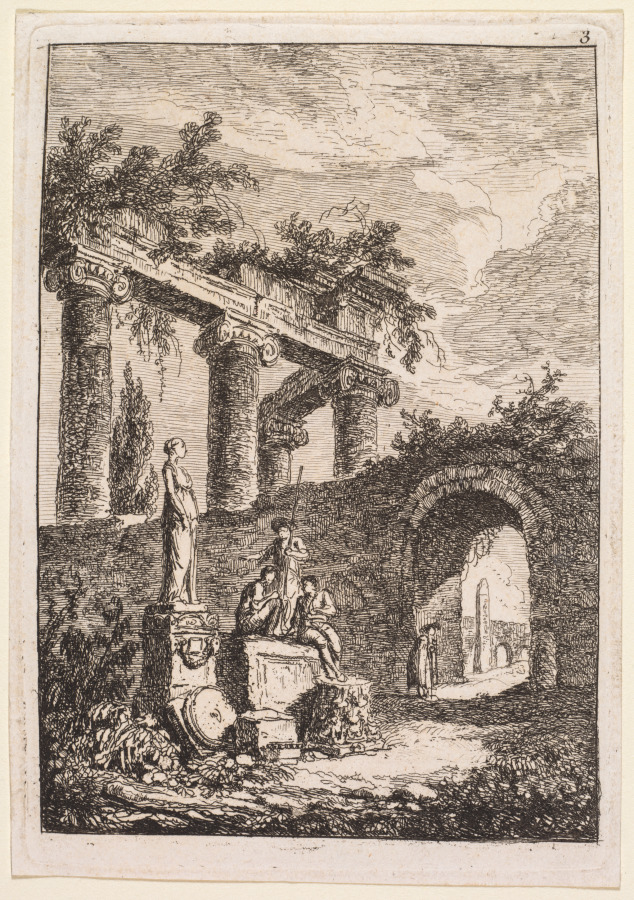
The Statue in Front of Ruins — Hubert Robert, 1763–64La estatua frente a las ruinas — Hubert Robert, 1763-64

Inscriptions of Freedmen and Slaves, from Le Antichità RomaneInscripciones de libertos y esclavos, de Le Antichità Romane

Before the Meal at EmmausAntes de la comida en Emaús
Written by an AI model (muse-wonder-1.0). Check the references before relying on dates or names.Lo escribió un modelo de IA (muse-wonder-1.0). Revisa las referencias antes de fiarte de fechas o nombres.